Building a world that works for autistic children
That’s exactly what Servier was looking to do when they asked us to design an activity book that makes medical examinations less stressful for kids on the autism spectrum. The idea was the brainchild of the French pharma giant and Zsuzsanna Szilvasy, the Founder of Mars Foundation and back then the President of Autism Europe, an autism rights association with over 90 member organisations from 38 European countries. And we were more than happy to help make it a reality.
Servier is committed to better understanding the abilities, needs and challenges of children and teens with autism spectrum disorders and developing new therapies that help them improve their communication and social skills as well as their restrictive and repetitive behaviours. As part of these efforts, the pharmaceutical laboratory has been conducting clinical studies with autistic children aged 2 to 6 years and 7 to 17 years.

The doctor’s visit demystified
Our goal was to design an activity book that lays out what happens in the examination room so kids will have no problem following what comes when and why. We closely studied Servier’s research process to make sure that each step is portrayed as accurately as possible and involves the least amount of variables.
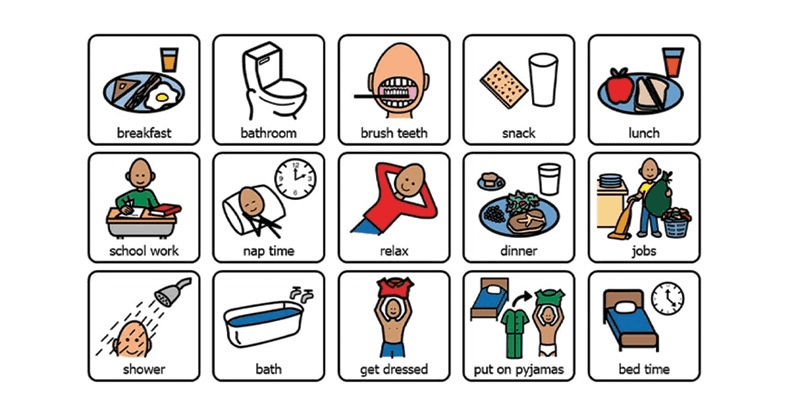
For a child with autism spectrum disorder, uncertainty is the biggest bogeyman, whether it’s about their next activity, next day or an unfamiliar social situation. Creating routines, structure and consistency around children with ASD is an essential step in setting them up for success. This is why parents are advised to use visual communication cards to explain what is going to happen throughout the day, week or a single activity to reduce anxiety and rigidity around transitions.
Removing steps that might be left out or performed differently during the examination process was one of the biggest challenges of the project. Followed by the task of designing characters that the children can easily recognise and identify with.
Given that Servier’s researchers have been building a large representative sample to obtain accurate medical data, the latter proved to be especially difficult. For the main character, we decided on a teenager who looks just the right age for the age groups targeted.
Whether the examination would be performed by a male or female doctor, however, wasn’t something we could anticipate. To make the activity book fool-proof, we came up with a gender-neutral character to avoid any confusion or discomfort.